
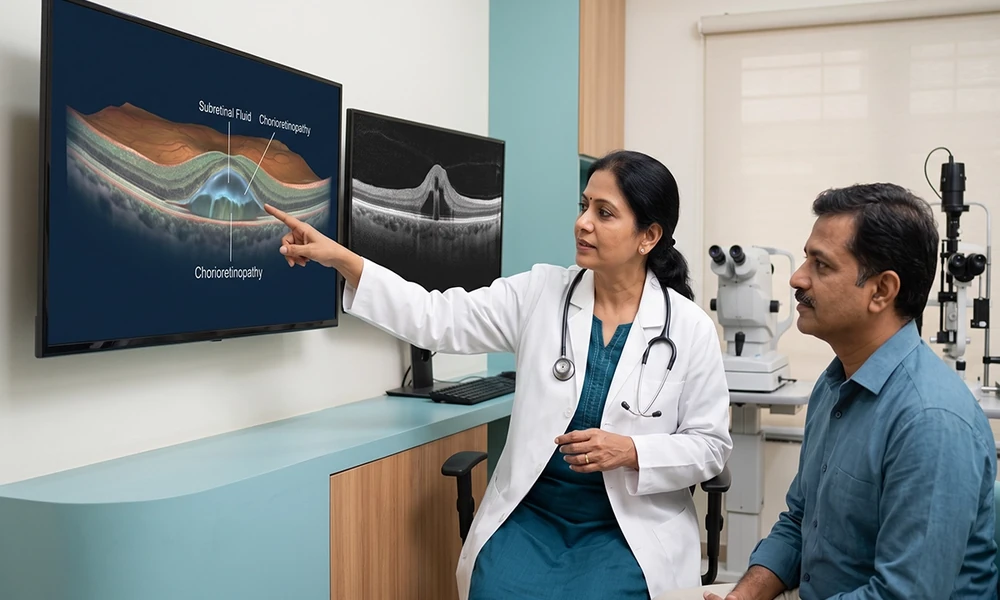

Diabetic macular oedema (DMO) is a complication of diabetes that affects the macula, the central part of the retina responsible for detailed vision. It develops when damaged retinal blood vessels leak fluid into the macula, causing swelling that can interfere with clear central vision. DMO can occur at different stages of diabetic retinopathy and may lead to vision problems if it is not detected and managed appropriately.
Understanding the condition, its symptoms, and available treatments can help people with diabetes recognise changes in their vision and seek appropriate eye care.
What Causes Diabetic Macular Oedema?
High blood glucose over time can damage the small blood vessels supplying the retina. As these vessels become damaged, they may become more likely to leak fluid and other substances into retinal tissue.
When fluid accumulates in the macula, the resulting swelling can affect the sharp central vision needed for activities such as reading, recognising faces, and driving.
DMO is associated with diabetic retinopathy, but the presence of diabetic retinopathy does not necessarily mean that a person will develop macular oedema. Regular eye examinations can help identify retinal changes before significant vision problems occur.
What Symptoms Should You Look For?
DMO can sometimes develop without obvious symptoms, particularly during its earlier stages. This is one reason regular diabetic eye examinations are important, even when vision appears normal.
When symptoms occur, they may include blurred or wavy central vision, faded colours, or difficulty seeing fine details. Some people may notice that straight lines appear distorted or that everyday activities requiring detailed vision become more difficult.
Any new or worsening vision changes should be discussed with an eye specialist rather than assumed to be a normal consequence of ageing or diabetes.
How Is DMO Diagnosed?
An eye specialist may perform a dilated eye examination and use retinal imaging to assess the macula. Optical coherence tomography (OCT) can provide detailed images of the retina and help identify swelling or fluid accumulation.
Regular monitoring is particularly important for people who already have diabetic retinopathy because retinal changes can progress even before noticeable symptoms appear.
Anti-VEGF Injections
Anti-VEGF injections are an important treatment for many people with DMO. VEGF is a protein that can contribute to abnormal blood vessel leakage and retinal swelling. Anti-VEGF medicines work by blocking this activity, helping reduce fluid and potentially improve vision.
Depending on the patient’s response, treatment may involve a series of injections followed by longer intervals between appointments. Some patients require ongoing treatment, while others may eventually need injections less frequently.
Steroid Treatment
Corticosteroids may also be used to reduce retinal swelling and inflammation in selected patients. They can be delivered through injections or sustained-release implants. However, steroid treatment can increase the risk of cataracts and raise eye pressure or glaucoma. Patients receiving these treatments therefore require appropriate eye monitoring.
Laser Treatment
Laser therapy is another option for certain forms of DMO. It works by targeting areas associated with leaking blood vessels to reduce fluid leakage and retinal swelling.
Laser treatment may be considered when DMO does not involve the centre of the macula or in particular situations where other treatments are unsuitable. Treatment decisions depend on the location and severity of the oedema and the patient’s vision.
Managing Diabetes Matters
Eye treatment is only one part of managing DMO. Keeping blood glucose, blood pressure, and cholesterol under appropriate control can help reduce the risk of diabetes-related complications and vision loss.
People with diabetic retinopathy should follow their diabetes management plan and attend recommended eye appointments. Good systemic health management can complement treatment provided directly to the eye.
Why Follow-Up Is Important
DMO treatment may require repeated appointments and monitoring. OCT scans and vision assessments allow the specialist to determine whether retinal swelling is improving, remaining stable, or returning.
Missing appointments can make it harder to monitor changes and adjust treatment when necessary. For people receiving injections, regular attendance is particularly important because treatment schedules are often adjusted according to the eye’s response.
Choosing the Right Treatment
There is no single treatment that is appropriate for everyone with DMO. The choice can depend on whether the oedema involves the centre of the macula, the level of vision impairment, previous treatment, and other health considerations.
Current guidelines recommend anti-VEGF treatment as a first-line option for many eyes with centre-involving DMO and visual impairment, while laser or corticosteroid treatment may be appropriate in selected circumstances.
Conclusion
Diabetic macular oedema is a diabetes-related condition that causes fluid to build up in the macula and can affect central vision. It is closely associated with diabetic retinopathy, making regular eye examinations an important part of diabetes care.
Treatment may include anti-VEGF injections, corticosteroids, laser therapy, or observation depending on the individual’s condition. Alongside specialist eye care, managing blood glucose, blood pressure, and cholesterol can support overall eye health. Early detection and consistent follow-up can help protect vision and ensure treatment is adjusted when needed.
What is Diabetic Macular Oedema and What are the Treatments Available?
