

Behind every well-fitting restoration is a series of checks that patients never see. In digital dentistry, many of those checks happen before anything is manufactured, which is exactly why they are so valuable.
The first check is on the incoming data. Is the scan complete? Are the margins clearly visible? Is the bite recorded properly? If anything is unclear, the case is flagged and the clinic is contacted before design begins.
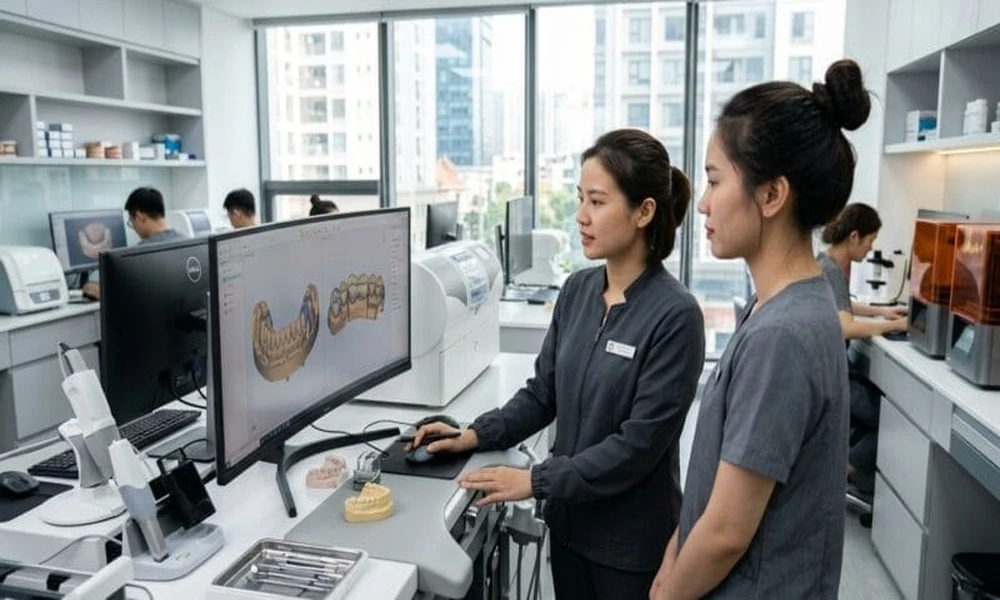
During the design itself, software provides objective measurements. The designer can check the thickness of the restoration to make sure it meets the material’s requirements, inspect the contact with neighboring teeth, and view the bite as a color map. These tools turn what used to be a judgment call into something that can be measured.
After the design is complete, a second look is often applied. In a well-run 3d labo, another team member may review the case against the prescription, checking that the material, shade, and design details all match what the dentist asked for. A fresh pair of eyes catches things that are easy to miss when you have been focused on one case.
The final review belongs to the dentist. The design is sent back for approval, and the dentist can request changes before production begins. This shared sign-off means responsibility does not sit with any single person.
For patients, all of this translates into something simple: fewer surprises. When quality is built into each stage, restorations are more likely to fit correctly at the first appointment, without repeated adjustments.
